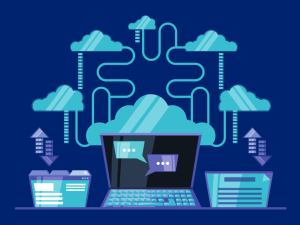

Digital education has expanded rapidly, but access to reliable connectivity remains uneven. While many learners benefit from cloud-based platforms and interactive tools, students in remote and underserved areas often face unstable or limited internet access. This makes consistent participation in online learning difficult and, at times, impossible.
Modern education depends on video content, real-time interaction, and digital resources that require steady connectivity. Traditional infrastructure such as fiber and cellular networks is expensive and challenging to deploy in isolated regions, leaving many communities behind. As learning becomes increasingly digital, these limitations highlight the need for alternative approaches that can deliver quality education without relying solely on centralized networks.
This challenge has brought attention to edge computing and satellite-based solutions as a way to bring learning closer to where students are, rather than depending entirely on distant data centers.
What Is Edge Computing and Why Does It Matter Now?
Edge computing processes data closer to the end user instead of sending everything to centralized cloud servers. By handling content and applications locally, it reduces delays and improves reliability, especially in low-connectivity environments.
In education, this allows learning platforms to function more smoothly, even when internet access is limited. Videos load faster, interactive tools respond better, and essential resources remain available during connectivity disruptions. Edge computing has become increasingly relevant as digital learning tools demand low latency and consistent performance.
As education continues to rely on real-time and interactive experiences, edge computing offers a practical way to support digital learning at scale. When combined with satellite connectivity, it enables educational access in regions where traditional infrastructure falls short.
What Is Satellite Edge Computing?
Satellite edge computing is a model that combines satellite connectivity with local data processing to deliver digital services in areas where traditional internet infrastructure is limited or unavailable. Instead of relying entirely on distant cloud data centers, this approach brings computing power closer to learners by using on-site edge servers connected through satellite networks. These local systems process and store educational content near the point of use, reducing latency and improving reliability. By minimizing dependence on continuous, high-bandwidth connections, satellite edge computing makes it possible to deliver consistent digital learning experiences in remote and underserved regions.
How Does Satellite-Based Processing Work?
- Schools or learning centers connect to the internet using satellite dishes instead of fiber or cellular networks.
- Satellites provide connectivity to remote locations regardless of geography.
- Local edge servers are installed on-site to store and process educational content.
- Frequently accessed materials such as videos, lessons, and assessments are cached locally.
- Reduced reliance on distant data centers lowers latency and improves response times.
- Learning platforms remain usable even during network disruptions.
Why Is Edge-Based Processing Important for Education?
- Brings digital learning closer to students by processing data locally.
- Reduces delays in accessing interactive and real-time educational tools.
- Improves reliability in regions with unstable or low-bandwidth connections.
- Enables offline or low-connectivity learning experiences.
- Supports scalable education delivery in remote and underserved areas.
Key Implications of Edge Computing for Remote Learning
- Wider access to education: Enables students in remote or underserved regions to access high-quality digital learning resources.
- Reduced internet dependency: Learning platforms remain functional even with limited or unstable connectivity.
- Faster content delivery: Locally stored lessons, videos, and assessments load quickly with minimal delay.
- More reliable learning experience: Classes and digital tools continue to work during network interruptions.
- Support for interactive learning: Makes real-time tools like virtual labs, simulations, and collaboration platforms usable.
- Consistent learning continuity: Ensures students can continue learning without frequent disruptions or delays.
How Edge Computing Is Reshaping the Future of Education Delivery
Edge computing is fundamentally changing how education is delivered by removing location as a limiting factor. When data processing happens closer to learners, digital education becomes more responsive, stable, and inclusive. Schools and training centers no longer need to rely entirely on centralized cloud infrastructure or continuous high-speed internet to offer modern learning experiences. Instead, educational content and applications can function reliably within local environments, even in areas where connectivity is intermittent. This shift allows institutions to design learning models that prioritize outcomes rather than infrastructure constraints. Real-time interactions, personalized learning tools, and data-driven insights become practical in places where they were previously impossible. Over time, edge computing supports a more decentralized education ecosystem, one that adapts to learners’ needs, scales efficiently, and delivers consistent quality regardless of geography.
These technological improvements directly enable advanced learning tools that can transform the classroom experience, even in remote areas.
Support for Advanced Learning Tools
The reduced latency of satellite-based edge computing allows students to access real-time educational applications that were previously impossible in isolated regions. Virtual labs, AI-driven personalized learning platforms, and collaborative tools can now run seamlessly, making learning interactive, engaging, and adaptive. Institutions like Ascend Education are leveraging this technology to provide skill-focused programs to geographically dispersed learners. By deploying edge servers locally, they ensure that advanced learning resources are accessible instantly, allowing students to fully participate in digital classrooms, explore simulations, and complete projects efficiently. This approach not only bridges the digital divide but also empowers educators to deliver high-quality, learner-centric instruction regardless of location, fundamentally transforming how remote education is delivered.
Challenges of Implementing Edge Computing in Education
- Initial infrastructure costs: Setting up satellite connectivity and local edge servers requires upfront investment.
- Technical expertise requirements: Schools need trained staff to manage and maintain edge systems.
- Scalability considerations: Expanding edge infrastructure across multiple locations can be complex.
- Integration with existing platforms: Legacy learning systems may need updates to work seamlessly with edge architectures.
- Power and hardware reliability: Remote locations may face challenges related to consistent power supply and equipment upkeep.
Why These Challenges Are Temporary, Not Barriers
- Advancing technology is lowering costs: Satellite services and edge hardware are becoming more affordable and efficient.
- Simplified deployment models: Managed edge solutions reduce the need for deep technical expertise on-site.
- Growing institutional experience: As adoption increases, best practices and standardized frameworks are emerging.
- Stronger ecosystem support: Education providers, technology vendors, and governments are investing in scalable solutions.
- Long-term benefits outweigh setup effort: Improved access, reliability, and learning outcomes justify the transition.
What Edge Computing Means for the Future of Remote Learning
Edge computing represents a meaningful shift in how remote learning is designed and delivered. By processing data closer to learners, educational institutions can provide more stable and responsive digital experiences, even in environments with limited or inconsistent connectivity. This model reduces dependence on centralized cloud systems and allows learning platforms to function reliably across a wider range of locations. As a result, educators can introduce richer content, interactive tools, and real-time feedback without worrying about technical constraints. Over time, edge computing will help create learning systems that are more scalable, resilient, and capable of adapting to diverse learner needs.
Why Satellite-Based Edge Computing Matters for Education Access
Satellite-based edge computing plays a critical role in expanding access to education where traditional infrastructure falls short. In remote or hard-to-reach regions, satellites provide a practical alternative to fiber or cellular networks, enabling institutions to deliver digital learning at scale. When paired with local edge processing, this connectivity becomes more reliable and less dependent on constant bandwidth availability.
Students benefit from uninterrupted access to lessons, assessments, and learning tools, regardless of their location. This approach not only improves access but also ensures a more consistent and equitable learning experience, helping close long-standing gaps in educational opportunity.
The Role of Educational Institutions in Adopting Edge Computing
Educational institutions are at the center of making edge computing a practical reality for learning environments. Adoption is not simply about installing new hardware; it requires a strategic shift in how education infrastructure is designed and managed. Schools, universities, and training providers must evaluate how content is delivered, how platforms perform under limited connectivity, and how learners access resources in different settings. By deploying local edge servers connected through satellite networks, institutions can ensure that essential learning materials are always available, even when internet connections are slow or unstable.
This approach also encourages institutions to rethink curriculum delivery. Learning content must be optimized for local processing, allowing lessons, assessments, and interactive tools to function efficiently without constant cloud access. Over time, institutions that invest in edge computing will gain greater operational resilience, reduce dependency on centralized systems, and improve learning continuity. More importantly, they position themselves to support a wider range of learners, including those in remote or infrastructure-limited regions, without compromising educational quality or performance.
Long-Term Impact on Educational Equity and Digital Inclusion
The broader impact of satellite-based edge computing lies in its ability to address long-standing inequalities in access to education. For many learners, geographic location has historically determined the quality and consistency of educational opportunities. Edge computing helps break this link by enabling reliable digital learning experiences regardless of local infrastructure limitations. When educational resources are processed and stored closer to learners, access becomes more consistent, predictable, and inclusive.
Over time, this reliability supports deeper engagement with learning. Students are less likely to experience interruptions, missed lessons, or limited access to interactive tools. As a result, outcomes improve and gaps between connected and under-connected regions begin to narrow. Edge computing also supports institutions in expanding their reach without overextending central infrastructure. As adoption grows, it contributes to a more balanced education ecosystem, one where digital inclusion is not an aspiration but an operational standard.
Conclusion: Why Edge Computing Will Redefine Remote Education
Edge computing, combined with satellite-based connectivity, represents a fundamental shift in how remote education is delivered and sustained. Rather than forcing learners to adapt to infrastructure limitations, this model adapts infrastructure to learners’ realities. By processing data closer to where learning occurs, institutions can deliver consistent, responsive, and engaging digital education experiences even in the most challenging environments.
As technology matures, the barriers to implementation will continue to decrease, making edge computing more accessible to a wider range of educational providers. What begins as a solution for remote learning will increasingly influence mainstream education delivery models. In the long term, edge computing will help redefine what equitable education looks like one where access, reliability, and quality are not dependent on geography but are built into the system itself.
FAQs
Q1. How is edge computing different from traditional cloud-based education platforms?
Traditional cloud platforms rely on centralized data centers, which can cause delays and interruptions in low-connectivity areas. Edge computing processes data locally, improving speed, reliability, and access even when connectivity is limited.
Q2. Does satellite-based edge computing replace the need for the internet entirely?
No. It reduces dependence on continuous high-speed connectivity but still uses satellite links for synchronization, updates, and external communication when available.
Q3. Can edge computing support real-time collaboration in online classrooms?
Yes. By reducing latency and processing data locally, edge computing enables smoother video sessions, collaborative tools, and interactive applications compared to traditional satellite-only setups.
Q4. Is satellite edge computing suitable only for remote regions?
While it is especially valuable in remote or underserved areas, edge computing also benefits hybrid and distributed learning environments by improving performance and resilience.
Q5. How does this technology impact data privacy in education?
Local data processing limits unnecessary data transmission, helping institutions maintain better control over sensitive student information and comply with privacy standards.