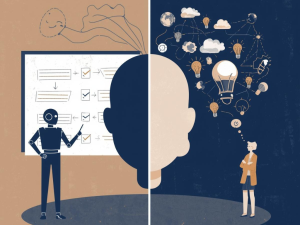

Security friction has increasingly shifted from a safeguard to a source of risk as identity controls grow more complex. Employees today manage multiple credentials, frequent authentication prompts and repeated access checks across cloud and remote environments. While these controls are designed to enhance security, their cumulative effect often leads to frustration and fatigue. When access becomes disruptive to productivity, users naturally seek shortcuts, weakening the very protections meant to keep systems secure.
This shift has redefined the threat landscape. Security failures are now driven less by missing controls and more by overuse of them. Excessive friction erodes trust and encourages risky behavior such as password reuse, prompt approval without verification, or bypassing approved systems altogether. In this context, simplifying access is no longer a usability goal, it is a foundational security requirement.
What Is Identity Fatigue and Why Is It Now an Enterprise-Wide Problem?
Identity fatigue refers to the mental strain and frustration users experience from repeated, complex and inconsistent authentication demands. In modern enterprises, employees and customers alike are required to navigate a growing web of logins, multi-factor authentication prompts, session timeouts, and access approvals often multiple times a day. As organizations adopt more digital tools and cloud services, identity interactions have multiplied, turning access management into a persistent source of friction. What makes identity fatigue particularly dangerous is its gradual normalization. Users begin to expect interruptions and, over time, stop engaging thoughtfully with security prompts. Authentication becomes a reflexive task rather than a deliberate verification step. This desensitization reduces vigilance and increases the likelihood of risky behavior, such as approving login requests without verification or ignoring security warnings altogether.
Identity fatigue has escalated from an inconvenience to an enterprise-wide security issue because identity is now the primary control plane for access. With perimeter-based defenses fading and work happening everywhere, identity sits at the center of security strategy. When users are exhausted by identity controls, the entire security model weakens. Identity fatigue does not affect isolated individuals; it scales across departments, systems and customer experiences, quietly increasing exposure and undermining trust in security processes that are meant to protect the organization
Why Are Attackers Actively Exploiting Identity Fatigue in 2026?
Attackers increasingly exploit identity fatigue because it targets the most predictable weakness in modern security: human behavior under constant pressure. Rather than attempting to bypass technical defenses, threat actors focus on overwhelming users with repeated authentication requests, impersonation attempts and access prompts. Over time, users become desensitized, treating security interactions as routine interruptions rather than critical decision points. This creates ideal conditions for attacks that rely on users approving access reflexively, especially in fast-paced work environments where interruptions are seen as obstacles to productivity.
Automation and AI-enabled tools have amplified this problem, enabling attackers to scale identity-based attacks with precision. Techniques like repeated authentication prompts, realistic impersonation messages, and contextual social engineering are designed to blend into normal access patterns. Because these attacks mimic legitimate activity, they often evade traditional detection methods. Identity fatigue is therefore not just a usability issue; it has become a systemic security vulnerability that can only be addressed by reducing unnecessary friction while implementing intelligent, context-aware access controls.
How Does Identity Fatigue Translate Into Real Security Risk?
- Risky User Workarounds Become Normalized
Users overwhelmed by constant logins and prompts often reuse passwords, approve access without verification, or bypass controls entirely to maintain productivity. - MFA Fatigue Attacks Gain Effectiveness
Repeated authentication requests increase the likelihood that users approve malicious access simply to stop the interruptions. - Higher Susceptibility to Social Engineering
Fatigued users are less likely to scrutinize requests, making them easier targets for impersonation and AI-generated deception. - Silent Expansion of the Attack Surface
Excessive access complexity leads to unmanaged accounts, over-privileged users, and overlooked access paths that attackers can exploit. - Erosion of Trust in Security Controls
When authentication feels obstructive rather than protective, users disengage from security practices altogether, weakening overall defenses.
Why Is Access Complexity Actively Undermining Security?
Access complexity has become a major driver of identity-related risk. Organizations using multiple identity providers, layered MFA and application-specific logins force users to authenticate repeatedly throughout the day. While each control may be justified individually, the cumulative effect is fatigue and disengagement. Authentication becomes a background task rather than a conscious security decision, encouraging rushed approvals, password reuse, and reduced attention to alerts.
High volumes of digital work amplify the problem. When security feels like an obstacle, users often find workarounds, unintentionally weakening protections. Access complexity doesn’t just frustrate employees it actively undermines security by normalizing risky behavior within everyday workflows.
How Are IT Teams Struggling to Balance Security Controls and User Trust?
IT and security teams are increasingly caught between enforcing strong identity controls and maintaining user trust. On one side, regulatory pressure, identity-based attacks and zero trust initiatives demand tighter access policies and continuous verification. On the other, employees expect fast, reliable access across hybrid environments where delays directly impact performance. This tension often leads to layered controls added reactively, without reevaluating the overall access experience. Over time, identity environments become fragmented, inconsistent and difficult to manage.
When authentication feels excessive or unpredictable, users begin to disengage from security processes altogether. Trust erodes as employees perceive security teams as barriers to productivity rather than partners in protection. This dynamic encourages shadow access practices, informal credential sharing and avoidance behaviors that further increase risk. Without a unified strategy that aligns security objectives with usability, IT teams struggle to maintain both control and credibility.
Why Is Access Simplicity Emerging as a Core Security Strategy?
Access simplicity is emerging as a core security strategy because it directly addresses the behavioral weaknesses that identity-based attacks exploit. Complex and inconsistent authentication experiences increase cognitive load, causing users to treat security prompts as routine interruptions rather than meaningful decision points. By simplifying access journeys and reducing unnecessary friction, organizations restore user attention at critical moments. Context-aware authentication, consistent login experiences and fewer repetitive prompts make it easier for users to recognize when something feels unusual, improving their ability to respond appropriately to potential threats.
Security leaders increasingly understand that effective identity protection depends on quality of interaction rather than quantity of controls. Access simplicity enables security to operate continuously in the background, surfacing only when risk increases. This approach preserves productivity while strengthening protection, ensuring users remain engaged rather than fatigued. Rather than weakening defenses, simplification concentrates security where it has the greatest impact on behavior, trust and adoption. As organizations prioritize access simplicity, they shift identity security from a reactive barrier into a proactive, user-aligned control that scales with modern work.
How Is Access Simplicity Changing the Way Security Is Designed?
Access simplicity is fundamentally reshaping how organizations design security architectures. Traditional models relied on frequent, visible authentication checkpoints, assuming constant verification meant stronger protection. In practice, these approaches increased friction, caused user fatigue, and drove risky behavior. Security leaders are now shifting toward models that integrate protection seamlessly into workflows, minimizing interruptions while maintaining strong assurance. The focus is no longer on challenging users at every step, but on continuously evaluating risk and intervening only when conditions change.
This evolution is powered by context-aware and adaptive security mechanisms. Modern identity systems analyze signals such as device health, network conditions, behavioral patterns, and access history to determine risk levels in real time. When activity aligns with established patterns, access proceeds with minimal disruption. When anomalies emerge, additional verification or restrictions are triggered dynamically. This approach allows security to operate quietly in the background, preserving productivity while remaining responsive to threats. Access simplicity also drives more coherent security design across platforms and environments. Consistent authentication experiences reduce confusion, improve adoption, and make it easier for users to recognize suspicious behavior. Effective security design now prioritizes usability as a protective control rather than a compromise. By aligning identity systems with how people actually work, organizations can build defenses that are both resilient and sustainable, reducing identity risk without sacrificing trust or efficiency.
What Are the Core Strategies Enabling Access Simplicity?
- Passwordless Authentication
Reduces reliance on memorized credentials by using biometrics, passkeys, or hardware-based verification. - Context-Aware Access Controls
Adjusts authentication requirements dynamically based on user behavior, device posture, and environmental signals. - Continuous Verification Models
Monitors risk throughout a session instead of relying on repeated login prompts. - Streamlined Identity Governance
Automates access provisioning and removal to reduce manual errors and over-privileged accounts. - Just-in-Time and Least-Privilege Access
Grants access only when needed and only to the extent required, minimizing exposure.
Why Zero Trust Depends on Simpler Identity Experiences
Zero Trust architectures are often misunderstood as requiring more friction, when in reality their success depends on simplicity and clarity. At its core, Zero Trust assumes no implicit access and evaluates every request based on risk and context. However, when implemented through excessive authentication prompts and rigid controls, it accelerates identity fatigue and undermines adoption. Organizations are recognizing that Zero Trust must be experienced as seamless to be effective. Identity systems need to make trust decisions dynamically, without forcing users to repeatedly prove who they are.
Simpler identity experiences enable Zero Trust principles to operate continuously rather than episodically. Context-aware access, device trust, and behavioral signals allow security teams to verify users implicitly during normal activity and intervene only when risk increases. This approach reduces disruption while strengthening protection. When Zero Trust is aligned with access simplicity, it becomes a scalable security model that reinforces user trust instead of eroding it.
What Practical Steps Can Organizations Take to Reduce Identity Fatigue?
- Consolidate Identity Systems
Reduce the number of identity providers and login portals to create a consistent access experience across applications. - Rationalize MFA Prompts
Apply multi-factor authentication only when risk increases, rather than triggering prompts for every routine action. - Standardize Authentication Journeys
Ensure users encounter the same login flows and access rules regardless of platform or device. - Remove Unnecessary Access Barriers
Eliminate outdated, redundant, or low-value security checks that add friction without improving protection. - Align Access With Real Work Patterns
Review identity policies regularly to reflect how employees actually use systems, not how access was originally designed.
How Access Simplicity Strengthens Trust Between Users and IT
Access simplicity is not just a technical improvement; it is a trust-building mechanism between users and security teams. When employees experience constant friction, multiple logins, repeated MFA prompts, and inconsistent access rules they begin to see security as an obstacle rather than protection. Over time, this erodes confidence in IT policies and encourages risky workarounds that weaken the organization’s security posture.
By simplifying identity experiences, IT teams signal that security is designed with users in mind. Predictable, low-friction access reduces frustration and increases compliance because users are more willing to follow rules that feel reasonable and purposeful. When authentication flows are streamlined and context-aware, employees can focus on their work instead of managing credentials, while security remains active in the background.
This shift also changes how IT is perceived. Rather than being viewed as gatekeepers who slow productivity, IT teams become enablers of secure, efficient work. Trust grows when users understand that security controls adapt to risk instead of applying blanket restrictions. Now, organizations that prioritize access simplicity will see higher adoption of secure behaviors, fewer policy violations, and stronger collaboration between technical teams and the broader workforce.
Why Identity Strategy Must Evolve Beyond Tools and Technology
Many organizations treat identity challenges as tooling problems, adding layers without rethinking the user experience, which drives identity fatigue. An effective strategy shifts from technology-first to human-centered design, focusing on user behavior, access needs, and risk levels across roles. Policies should be adaptive, dynamic, and guided by real-time context rather than outdated static rules.
Leadership alignment is also crucial. Identity simplification requires collaboration across IT, security, compliance, and business units. When identity decisions align with workflows, organizations reduce friction while maintaining control. A holistic approach ensures systems support productivity, security, and trust in today’s complex digital environment.
Conclusion
Identity fatigue has reached a breaking point because security has become too complex for humans to sustain. In 2026, the greatest identity risks no longer stem from weak technology but from overwhelmed users navigating excessive controls. When access becomes frustrating, even well-intentioned employees bypass safeguards, creating openings that modern attackers actively exploit.
The path forward is not weaker security, but smarter security. Access simplicity through passwordless methods, context-aware verification, and streamlined identity governance reduces human error while strengthening protection. Organizations that embrace this shift move away from constant friction and toward security models that operate quietly, intelligently, and consistently.
By prioritizing usability alongside control, IT teams can restore trust, reduce risk, and improve compliance. Identity systems must evolve from barriers into enablers of secure work. Those who act now will be better positioned to defend against sophisticated threats while supporting productivity in an increasingly digital-first world.
FAQs
Q1. How can organizations measure identity fatigue among employees?
Surveys, access analytics, and login behavior tracking can reveal where users experience friction, high MFA drop-offs or repeated authentication failures, helping quantify fatigue levels.
Q2. Are passwordless solutions suitable for all users and devices?
While effective for most, passwordless methods may require fallback options for legacy devices, contractors or external partners who cannot use biometrics or hardware tokens.
Q3. How does access simplicity affect third-party vendor access?
Simplifying access can extend to vendors through role-based or just-in-time access, reducing friction while maintaining least-privilege controls and auditability.
Q4. Can simplifying access reduce compliance risk?
Yes. Streamlined, automated, and context-aware identity systems improve adherence to policies, reduce human error, and make it easier to demonstrate compliance during audits.
Q5. What role does AI play in supporting access simplicity?
AI can continuously monitor behavior, detect anomalies, and adjust verification requirements dynamically, allowing legitimate users smoother access while maintaining high security.