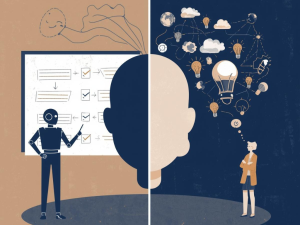

Here’s the thing most people outside cybersecurity still haven’t grasped: AI is no longer just a defensive tool. It’s now actively helping attackers write malware, generate exploit code, automate phishing campaigns, and test their attacks in ways that used to require expert skill.
Attackers don’t need to be advanced programmers anymore. With the right prompts and the right models, they can:
- Generate polymorphic malware that changes its signature every time it runs
- Build phishing kits that rewrite themselves to match different companies
- Create exploit code based on public CVEs within minutes
- Use AI to bypass detection tools by analyzing what triggers security alerts
This isn’t theoretical. Security researchers are already seeing AI-generated payloads in the wild. Scripts that used to take hours now take seconds. Malware that used to be clumsy is now smooth, adaptive, and frustratingly hard to detect. For security learners, that changes everything.
It means defence can’t rely on old playbooks. It means Security+, CySA+, and PenTest+ students need to understand how these AI-driven threats work, how they evolve, and how to test against them using hands-on labs, not textbook theory. This is the moment where cybersecurity stops being predictable. And it’s exactly why future security pros need a different kind of training.
How Attackers Are Using AI to Build a New Class of Malware?
Attackers aren’t just using AI as a shortcut, they’re using it to create threats that behave very differently from the malware students studied even two years ago. Here’s what’s actually happening behind the scenes:
AI-Generated Polymorphic Malware
Old polymorphic malware needed custom scripts to mutate its code. Now? AI models can rewrite payloads automatically:
- New code structure every generation
- Different encryption each time
- Varying execution paths to confuse scanners
Signature-based detection becomes almost useless because the “same” malware never looks the same twice.
Real-Time Evasion
Attackers can feed AI models data about what triggers antivirus alerts. The model then adjusts the malware on the fly until it slips past defenses. It’s trial-and-error at machine speed.
AI-Built Phishing Kits
Modern phishing campaigns aren’t sloppy anymore. AI can:
- Clone login pages with frightening precision
- Write hyper-personalized emails
- Generate endless variations to bypass spam filters
- Translate messages into perfect local languages
The result is phishing that feels “human”, sometimes more human than a human.
Automated Exploit Generation
Give an AI model a CVE and some reference code, and it can:
- Explain the vulnerability
- Generate proof-of-concept exploits
- Suggest obfuscation techniques
- Package everything into a usable script
This used to take days or weeks. Now it takes minutes.
Malware-as-a-Service, Powered by AI
The barrier to entry is disappearing. Dark-web tools already include:
- AI prompt libraries for malware creation
- Automated reconnaissance bots
- Disposable exploit generators
Attackers who once struggled to code can now deploy threats they barely understand.
Why Does This Change Everything for Security Learners?
AI-generated malware flips the security playbook, and that’s exactly why learners can’t rely on old patterns or static study methods anymore. Traditional attacks were predictable: fixed signatures, repeatable behaviours, and clear indicators. AI removes all of that. Threats now morph in real time, rewrite their own code, and adapt faster than most analysts can react, which means students must focus on understanding behaviours rather than memorizing definitions. Detection becomes a hands-on skill, not a theory exercise, you need real experience analyzing traffic, investigating anomalies, using SIEM and EDR tools, and recognizing subtle AI-generated phishing signals. Entry-level roles are shifting too, demanding stronger analytical abilities because AI now handles the routine work. And as attackers use automation to move faster, defenders must learn to work with AI, not against it knowing what to automate, what to validate, and when human judgment is critical. In short, cybersecurity has become a human-plus-AI discipline, and learners who adapt to this new reality will be the ones ready for the battlefield ahead.
The New Skillset: What Security+, CySA+, and PenTest+ Students Must Master
As AI-generated malware evolves, the certifications that once felt optional are now becoming the baseline. But passing the exam isn’t the point, it’s about the skills behind them.
Security+ students now need to think beyond textbook threats. They must understand behaviour-based detection, identity protection, and how AI-driven attacks bypass traditional controls. The core becomes mastering fundamentals deeply: network traffic flows, encryption, access control, and what “normal” looks like so anomalies stand out instantly.
CySA+ learners move into the world of analysis, where AI is both a tool and a threat. They must know how to work with SIEM platforms that use machine learning, interpret automated alerts, validate false positives, and recognize when AI-generated traffic is masking an attack. It’s less about spotting the malware and more about understanding how it moves.
PenTest+ students face the biggest shift. Offensive security now requires the ability to test environments the way attackers operate fast, automated, and adaptive. This means learning scripting, using AI-assisted tooling responsibly, and understanding how polymorphic malware hides inside memory, evades scans, or mutates mid-execution. Ethical hackers must simulate the strategies attackers use, not just the exploits themselves.
Across all three tracks, hands-on work is non-negotiable. Labs, break-fix environments, packet captures, log analysis, and AI-assisted simulations are where real learning happens. You cannot prepare for AI-powered threats by memorizing exam objectives; you have to train like an analyst, think like a hacker, and adapt like an engineer.
Why Hands-On Training Matters More Than Ever?
AI-generated attacks move too fast, change too often, and adapt too intelligently for theory-based learning to keep up. Security students can no longer rely on memorizing attack types or reading about exploits; they need to see how threats behave, break systems safely, and defend against live scenarios that evolve in real time.
Hands-on labs give learners the one thing AI-powered malware is trying to take away: practical intuition. When you troubleshoot a live phishing kit, analyze a malicious script, decompile an unknown payload, or watch a polymorphic sample rewrite itself, you start recognizing patterns that no textbook can teach. Simulated environments also let students make mistakes without consequences. You can detonate malware in a sandbox, misconfigure a firewall, run a risky scan, or patch a vulnerability the wrong way and learn from every misstep. This builds the confidence needed to handle real incidents where pressure is high and decisions matter.
Most importantly, hands-on training mirrors the modern SOC and penetration testing workflow. Analysts now pair human reasoning with AI-driven tools. Pen testers automate reconnaissance and generate payloads. Defenders validate machine learning alerts and tune detection rules. None of this becomes natural without repeated, realistic practice. AI has changed the threat landscape. Practical experience is how security learners keep pace.
The Certifications That Matter Now: Security+, CySA+, and PenTest+
As AI reshapes the threat landscape, the baseline for cybersecurity certifications is shifting too. Employers aren’t just looking for people who know definitions or frameworks. They want candidates who can recognize AI-generated attacks, validate alerts, dissect malicious code, and respond under pressure. That’s exactly where today’s CompTIA certifications fit in.
Security+ has become the new minimum for anyone stepping into security. It teaches the core concepts every learner needs to confront AI-driven threats: identity management, secure configurations, incident response, and the fundamentals of analyzing suspicious behaviour. When AI malware can generate thousands of phishing variations or probe for weak endpoints automatically, this foundational knowledge is essential.
CySA+ builds on that foundation by teaching students how to think like an analyst. Instead of reacting to threats, learners study patterns, behaviour analytics, SIEM tools, and real-world detection techniques. With AI producing noisier, faster-changing attacks, SOC teams rely heavily on people who can separate signals from noise and CySA+ trains exactly that mindset.
PenTest+ prepares those who want to go on the offensive. AI tools now help attackers generate exploit code, automate reconnaissance, and mutate payloads on demand. PenTest+ gives learners the skills to stay ahead: exploiting vulnerabilities safely, building proof-of-concept attacks, bypassing controls, and understanding how adversarial AI changes the offensive landscape. To defend against AI-powered attackers, students must understand the techniques those attackers use.
Together, these certifications reflect the new reality: AI is raising the stakes, and the cybersecurity workforce needs deeper, more practical expertise to match it.
Why Hands-On Training Matters More Than Ever?
AI-generated attacks move too fast, change too often, and behave too unpredictably for learners to rely on theory alone. Reading about malware is one thing. Watching it morph in real time, slip past weak filters, or break a poorly configured system is something entirely different. That’s why hands-on practice has shifted from “recommended” to absolutely essential for anyone entering cybersecurity today.
In lab environments, students get to work with real tools such as SIEM dashboards, packet captures, sandbox environments, vulnerability scanners and learn how threats behave beyond the textbook. They can safely analyze malicious scripts, observe how phishing kits operate, test detection rules, and see how a single misconfiguration can give an attacker full access. This kind of exposure builds instincts that AI malware can’t easily outsmart. Hands-on training also helps learners understand the limits of automation. AI may generate alerts, triage events, or scan systems, but it still struggles with context. Labs teach students how to interpret that context: when to trust AI output, when to question it, and how to make informed decisions when the data is messy or unclear.
Most importantly, practical experience builds confidence. When learners troubleshoot real attacks, break and fix environments, and practice incident response scenarios, they begin to think like defenders calm, analytical, and ready for whatever variation the next AI-generated threat throws at them.
How Security+, CySA+, and PenTest+ Keep Learners Ahead?
Security+, CySA+, and PenTest+ now form the core skill path for anyone preparing to face AI-generated threats. Security+ builds the fundamentals: how attacks work, how networks are secured, and how to respond to early warning signs. CySA+ trains learners to analyze logs, detect anomalies, and work with SIEM tools essential when AI malware constantly changes its behaviour. PenTest+ adds the offensive mindset, teaching how exploits are built and how attackers chain vulnerabilities together.
Together, these certifications teach defenders to understand attacks, investigate them, and anticipate an AI-driven adversary, a combination that’s becoming essential rather than optional.
Why Hands-On Labs Matter More Than Ever?
AI-generated malware doesn’t behave like traditional threats, which means reading theory or memorizing attack names isn’t enough. Learners need to see how these attacks evolve in real time. Hands-on labs give students a safe environment to experiment with exploit code, analyze malicious traffic, practice incident response, and test defensive tools against AI-driven behaviours.
In the lab, students watch how quickly polymorphic malware mutates, how phishing kits adapt wording based on user behaviour, and how evasion scripts change to bypass detection. This kind of exposure builds instinct, the ability to spot subtle patterns, investigate irregular behaviour, and respond decisively.
As AI accelerates the pace of attack development, practical training becomes the only reliable way to build defenders who can keep up.
Will AI Replace Cybersecurity Professionals?
AI may automate parts of threat detection, but it can’t replace the judgment, creativity, or intuition needed to defend modern systems. Attackers are using AI to generate new threats, but defenders use AI too as a force multiplier, not a substitute. Security professionals interpret ambiguous alerts, investigate unusual behaviour, make incident-response decisions, and understand the broader business impact of an attack. These are human skills AI can’t replicate. What AI will do is change the job: routine tasks will shrink, while high-level analysis, strategy, and hands-on investigation become more important. This shift makes cybersecurity roles more challenging, more impactful, and more dependent on continuous learning.
Conclusion: The Future of Cybersecurity Belongs to Those Who Can Keep Up With AI
AI-generated malware isn’t a distant threat anymore. It’s part of the threat landscape students will face from their first day on the job. Attackers are moving faster, automating everything from exploit creation to phishing campaigns, and testing defenses in real time. The only realistic response is for defenders to become just as adaptive. For future cybersecurity professionals, this means one thing: theory isn’t enough. Hands-on labs, real attack simulations, threat-hunting exercises, and certification-aligned practice are now essential. Security+, CySA+, and PenTest+ learners who train with AI-aware tools will be the ones ready for modern attacks.
The field isn’t getting easier, but it is getting more exciting. AI isn’t replacing cybersecurity talent, it’s forcing the rise of a new generation of defenders who think faster, test deeper, and never stop learning.
If you can build those habits now, you’ll be ready for whatever the next wave of AI-powered threats brings.
FAQs
1. Can AI tools help defenders just as much as attackers?
Yes. Security teams use AI for threat detection, anomaly spotting, faster incident response, and analyzing logs at a scale humans can’t manage alone.
2. Are beginners at a disadvantage against AI-generated malware?
Not if they train correctly. Hands-on labs and simulation-based learning prepare beginners to recognize and respond to modern, AI-shaped threats.
3. Does AI make traditional security tools obsolete?
No. Firewalls, SIEMs, and endpoint tools still matter, they just need to be paired with AI-driven detection and human decision-making.
4. Will AI replace penetration testers?
AI can automate basic exploit creation, but human testers are still needed for creative attacks, context-based testing, and interpreting complex weaknesses.
5. Is AI malware always detectable?
Not immediately. Polymorphic and evasive AI-generated malware can bypass signature-based tools, which is why behavioural analysis and hands-on practice are essential for learners.